Are Personal LLMs Becoming the New Resume?

I have been thinking about a question that feels slightly uncomfortable, mostly because it might be true.

Are we approaching an age where someone’s value in the job market is less about raw experience, and more about the quality and effectiveness of their personal large language models (LLMs)?

Not “who uses artificial intelligence,” because at this point, that is like asking who uses search or spreadsheets.

I mean this instead: who has built a personal system that reliably turns messy inputs into clear outputs, faster decisions, better communication, and fewer dropped balls?

Experience still matters, but the leverage is changing

Experience used to be a strong proxy for a few things:

  • Pattern recognition
  • Knowing what questions to ask
  • Knowing what good looks like
  • Communicating clearly when things get chaotic

Now we have tools that can supply patterns instantly, draft strong first passes, and help structure thinking.

And the data is starting to show meaningful productivity gains when people use these tools well. In controlled studies, access to generative artificial intelligence has improved speed and quality on certain professional writing tasks. In real workplace settings, generative assistants have shown measurable output gains, with the biggest lift often showing up for less experienced workers (because the tool helps them “close the gap” faster).

But there is a catch that most headlines gloss over.

The tool alone is not the advantage. The system around it is.

Even at Davos this month, one theme was blunt: companies do not get value from artificial intelligence unless they redesign work and invest in training.

That maps to what I see personally. The people getting the most out of LLMs are not the ones who found the cleverest prompt on social media.

They are the ones who treat it like an operating system.

A personal LLM is not a chatbot. It is a workflow.

When I say “personal LLM,” I mean something more specific than “I ask ChatGPT questions.”

I mean a setup that is:

  • Tuned to how you think
  • Organized by context (so it does not turn into one giant junk drawer)
  • Consistent in output format (so you can reuse results, not rewrite them)
  • Guardrailed (so it does not confidently make things up and send you on a goose chase)

If you do this well, you get a multiplier effect on your actual experience.

You still need judgment. You still need domain knowledge. You still need taste.

But your throughput goes up, and your cognitive load goes down.

That is a real advantage in a world where the work never stops piling up.

What I do (practical strategies that actually stick)

I am going to keep this concrete. Here are a few habits that have made the biggest difference for me.

1) One project per reality

I separate my LLM work by context. Work projects, career projects, personal projects. If it has different rules, different output needs, or different “what good looks like,” it gets its own space.

This prevents context bleed, and it helps the model stay consistent. It also makes it easier for me to find things later, which is half the battle.

2) I start each project with a “contract”

At the top of a project, I write a short set of rules like I am onboarding a new teammate:

  • What I care about (speed, accuracy, tone, depth)
  • What to avoid (fluff, invented details, vague advice)
  • The format I want back (headings, bullets, action items)

This one step is boring, but it pays off every single time.

3) I force structured outputs

If I want a meeting summary, I do not ask, “Summarize this.”

I ask for the exact structure I need, every time. Example:

  • Summary (5 bullets max)
  • Decisions
  • Risks and open questions
  • Action items (owner, due date in mm/dd/yyyy, no weekend dates)

When the output is predictable, I move faster. I can paste it into an email, a document, a tracker, or a status update without reformatting everything.

4) I explicitly separate facts from assumptions

I regularly ask for two sections:

  • What you know (based on what I provided)
  • What you are assuming (and how to verify it)

This is a guardrail against confident nonsense, and it trains me to keep a healthy skepticism.

5) I use the model to reduce switching costs

I treat it like a “translator” between modes:

  • Brain dump ? clean plan
  • Chaos ? crisp status update
  • Long thread ? short executive summary
  • Vague idea ? testable hypothesis + next step

Most knowledge work is not hard because the tasks are impossible.

It is hard because we constantly pay the mental tax of switching contexts and formats.

6) I keep reusable templates

This is the part that feels like cheating, but it is just process.

I keep a small set of prompts I reuse, like:

  • “Turn this into a one-page plan with risks and dependencies.”
  • “Rewrite this for a director-level audience, no extra words.”
  • “Give me three options, recommend one, and tell me what you would do first.”

The goal is consistency, not creativity.

Why this is showing up in the job market

Hiring is a pattern-matching game.

If two candidates have similar experience, the tie-breaker is often:

  • Communication quality
  • Speed to clarity
  • Ability to operate across ambiguity
  • Evidence of strong systems thinking

A well-built personal LLM workflow amplifies all of those.

It also creates a new kind of “proof of capability.” Not a certification. Not a buzzword.

A repeatable way of working.

And yes, hiring is being reshaped by automation too. The tools evaluating candidates are changing, and that raises fairness and transparency questions that we are going to have to deal with in the open.

The part we need to be honest about

There are real risks here:

  • Privacy and confidentiality (do not paste sensitive data into tools that are not approved for it)
  • Hallucinations (the model can be wrong with confidence)
  • Overreliance (you still need to think)
  • Inequality of access (not everyone has the same tools, time, or support)

So my take is not “personal LLMs replace experience.”

My take is simpler:

We are moving into a world where experience is the foundation, and your personal LLM workflow is the leverage.

The new baseline skill: building your own leverage

If you are early in your career, this can be a rocket booster. If you are senior, it can keep you from drowning in meetings and context switching.

Either way, the advantage is not the model.

It is how you set it up, how you guide it, and how you validate it.

If you are a hiring manager, you might start asking candidates a new question:

“Show me how you work with an LLM, and how you keep it reliable.”

If you are a candidate, you might want to treat your personal LLM like a professional toolchain, not a toy.

Because the job market is already rewarding people who can turn tools into systems.

Question for you: what is one workflow you would immediately improve if you had a reliable personal LLM setup?

Apple’s New Handwashing Counter is Apple’s Best Use of a Wearable Yet!

Background

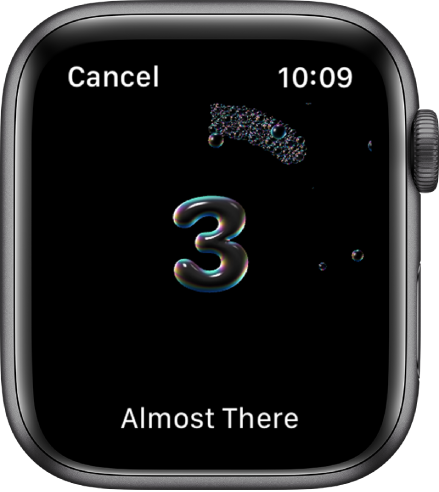
Starting with Apple’s WatchOS 7, there is a new handwashing timer. If you have not seen it yet, please check the video below to understand what it is. In short, it senses when you are washing your hands. Then starts a timer to help you know when it’s been 20 seconds. Once the time is up, you’ve sufficiently washed your hands enough according to the latest science.

Sure, you can sing ♫Happy Birthday♫ twice or count to twenty yourself, but you have a “Smart” watch. Shouldn’t it be… well… Smart?

COVID-19

I have to go there, so let’s get it out of the way. COVID-19 ushered in a new urgency for washing your hands. We all knew we should do it, but many of us rushed through it and said, good enough. We try, but we certainly are not singing ♫Happy Birthday♫ twice every single time. It’s crucial to get this right. After all, according to the FDA, antibacterial soap is not more effective than regular soap and led us down the path towards creating superbugs. Also, washing our hands properly is one of the two most effective ways to deal with COVID-19 (the second is wearing a mask).

Comparison to Other Health Features and Devices

Now, I know what you may be thinking. “How can the handwashing feature be better than tracking your steps, monitoring your heart rate, or following your exercise routine?” Sure, these are all great technical achievements. Someday, maybe we can use this data to drive real changes in behavior or get us better medical care. The key-word here is “someday.”

Do not get me wrong, I love my Apple watch. But I am a tech product nerd. I mostly just love the idea of having that much technology on my wrist. However, in many ways, it is a glorified journal/Pavlovian notification engine. How many people do you think are extracting their health data, analyzing it, and making changes based on what they find? I’ll bet that most people have no idea what to do with the data once they have it.

Let’s compare the Apple Watch to Whoop (hang tight, I assure you this is relevant and I am getting to the point). I mean look at this thing, it’s incredibly boring and uninteresting compared to the Apple Watch…

..but, that kind of the point. There is a reason that athletes like Lebron James are wearing a Whoop and not an Apple Watch. Aside from not getting distracted by notifications dinging as he runs up and down the court, the Whoop band provides real actionable data. You see, the Whoop band works on the principle that your variable heart rate can be a good predictor of stress and fatigue. As a result, an athlete and their trainer can make informed decisions about when to push and when to rest their athlete. This leads to protecting your investment as a coach and ensuring a long, healthy career for the athlete.

Putting it All Together

So, what does this have to do with Apple’s handwashing feature?

Just like the actionable data World Class Athletes get from a Whoop band, the handwashing feature:

  • Solves a problem
  • Is automatic and effortless
  • Works consistently

My primary critique about the Apple Watch since the day I first got it, was that I didn’t feel like it was solving a problem. The Apple Watch didn’t make me exercise more or eat less. Didn’t force me to go to sleep at a reasonable hour. It didn’t change my behavior in any meaningful way. It just felt like an extension of my phone. A way to get notifications, pay for goods, and stream podcasts without having to take my phone out of my pocket or grab it from across the room.

However, the handwashing feature is done so well in my experience that even if I started washing my hands and it didn’t register at first, that it was what I was doing, it would begin the countdown retroactively. So, instead of starting the countdown at 20 seconds from when it “registers” the event, it would start at 15 or 10 seconds, which is exactly what you should have left.

Hat’s off to you, Apple. You finally found a feature that changed my behavior for the better and has me washing my hands consistently for the appropriate amount of time.

Now if they can just figure out how to prevent me from shutting it off when I bump the buttons on the side. 🤣

The Patriots Won Because of Grit

You can come up with all sorts of reason for the patriots win, but the culture of grit, the relentless practice and frequency of playing 100% to the last second of every game is what got them here. Everyone wonders why the patriots don’t take it easy when they are up 40 points. It is because if you take it easy and slow down, you build the culture you practice. Regulation play, is the best practice you can face. The falcons came out hard, but their inability to play an entire game at full speed it what defeated them. 

Just look at all of the sudden falcon injuries and penalties in the second half. This is no accident. They got tired and sloppy. They simply have not developed the culture of grit the way the patriots have. 

Watch out for the falcons next year and beyond. Pete Carroll built grit into the culture of the Seahawks (which is why they give the patriots a run for their money) and Dan Quinn is a product of that culture. If he carries that culture forward to the young falcons team, they are going to be a serious contender for years to come. 
We are on to 2018! Oh and duckboats 🐐!

Are We Oversimplifying Product Management at the Expense of our Customers?

4843051331_90b3d73197_o


If you enjoy reading up on the latest practices and trends of product management as I do, you will probably notice a growing trend to simplify product management. You will see statements like:

  • Focus your product on doing one thing really well
  • Giving too many options increases complexity and reduces usability
  • Onboarding workflows should get the user to your products goal in as few steps as possible
  • The role of a Product Manager is to say no

It is easy to see why these are very attractive positions. The most valuable company in the world (Apple) positioned itself as prioritizing simple over complex. I am not advocating for making unnecessarily complex products, and in many cases, I would agree that simple is best; however, I would like to explore, is this right solution for everything?

Understanding your target audience

Assuming you have already identified your products goals/vision, when designing any product, you should always start with who is your target audience. Are you developing a health monitor for the elderly? Are you creating a tool for developers to manage product development roadmaps? These two questions are very different.

In the example of a health monitor for the elderly, we know that their past experiences in life and cognitive capabilities have not lent to being able to deal with complex technical devices very well (on average). Ever tried explaining a smartphone to your grandmother? I am going to guess explaining something like the difference between an app and a website or SMS and email, was quite complex for what you might consider to be mundane and obvious. Now, lets take this same health monitor and target it for elite athletes. I would imagine that if you told a strength and conditioning coach for the New England Patriots that you want one of their players to wear this monitor and we will only have it alert when there is an anomaly, they will tell you the device isn’t for them. Why is this the case? At these elite levels, they need to know everything from heart rate variability to hydration and from stress to sleep. This would be the only way they can tell if they should put the player out on that critical 4th down play!

In my second example, product managing a development roadmap can be extremely simple or extremely complex. For instance, planning a roadmap for a single purpose phone app is very different from creating a product which manages data for health care systems or processes hundreds of thousands of financial transactions every second. So, if you were to create an application which you believe is going to revolutionize product management, you are going to have to give some options and it is going to get complex quickly.

Not all Product Management strategies are created equal

Product management has become somewhat of a sexy role in the tech industry. The lure of creating a product that hundreds of thousands if not millions of people use is incredibly gratifying. To say you are able to make a difference in someone’s life is some of the best feedback you can get in any job. What has created this surge in job offerings? I suspect it has a lot to do with smart phone apps.

Apps are a revolutionary concept which has simplified interactions with digital products and services. Here you have a limited power device on limited real estate and a fairly consistent engine to run on. It is no surprise that doing one thing well, or limiting options for a user to select becomes very important. Focus can drive usability in a major way. However, there is a growing number of enterprise products, Kickstarter campaigns for hardware devices, raspberry pi projects, 3D Printing, etc. Are we to say that the digital app mentality will work with these products which are no longer limited to a fixed device standard? Are the digital product managers the vocal minority when sharing their experiences and strategy ideas?

Who are we really simplifying our product for?

Whenever I read about simplifying product management, I can’t help but get the sense that the PM is just trying to make their job easier. I am all for optimizing for maximum output, but we need to be honest with ourselves; by saying no, are we really doing it for the customers’ benefit or ours? Sometimes, to make something seamless and easy for a customer, you have to do some heavy lifting on the backend. Think about google, when you go to google.com, it is the most simple and basic form. One field, enter what you are looking for. Have you ever thought about how complex it must be to make something so simple give you thousands of results in under 1 second?

Companies like Apple and Google are not on top because they are basic, they are on top because they are extremely powerful and simple to use. They give you the flexibility to be as basic as you want or as advanced as you need. With power, comes complexity, deep thinking, and careful planning. Let’s look at Twitter for instance. When Twitter started, it was a simple SMS application for communicating with a large audience. Now, Twitter could probably stay relevant for a little while that way, but they have to continue to innovate and bring new features to keep the product fresh, compelling and competitive. Why do you think you are suddenly seeing more inline pictures, autoplaying videos, periscope, etc.? If it wasn’t for Facebook, Twitter might not have had to add these features.

Simplicity is great for launching a product, but let’s not act like you can sustain a long-term business with the “do one thing well” mentality.

Conclusion

I am not advocating that we should create unnecessarily complex and hard to use products. This leads to bugs, crashes, complex design strategies, difficult maintenance and unsustainable documentation needs. I do feel that we should be creating simple, easy to use products. What I would like to leave you with is the question, is simple, limited and small right for my customer or am I just trying to make my own life easier at the customer’s expense?

What are your thoughts on this matter? Let me know, I’d love to hear your experiences.

The Timing Is Never Right.

Here is an idea that has never been more true in my life than now! I’ve been saying this to friends for a little while now and I am glad to see it condoned elsewhere.

“I once asked my mom how she decided when to have her first child, little ol’ me. The answer was simple: “It was something we wanted, and we decided there was no point in putting it off. The timing is never right to have a baby.” And so it is.
For all of the most important things, the timing always sucks. Waiting for a good time to quit your job? The stars will never align and the traffic lights of life will never all be green at the same time. The universe doesn’t “conspire against you, but it doesn’t go out of its way to line up all the pins either. Conditions are never perfect. “Someday” is a disease that will take your dreams to the grave with you. Pro and con lists are just as bad. If it’s important to you and you want to do it “eventually,” just do it and correct course along the way.”

Excerpt From: Timothy, Ferriss. “The 4-Hour Workweek”